
Idaho Sex Offender Checks
The Idaho Central Sex Offender Registry is a public notification system. It is not a full Idaho criminal history report. Idaho State Police BCI maintains the central database under the adult and juvenile registration laws. County sheriffs handle the front line work, including initial registration, identity material, routine appearances, and address checks. IDOC and juvenile corrections also send information when their work creates a registration event.
The registry began with Idaho registration in 1993 and expanded under the community right-to-know laws in 1998. A user must accept the portal warning before searching. The agreement stresses that a name or birth date can produce a false match. Fingerprints are the only sure way to connect an identity to a registry record. Use the Idaho sex offender lookup for safety and awareness, then use the court file for the underlying judgment.
The official access agreement shows the warning presented before an Idaho registry search.
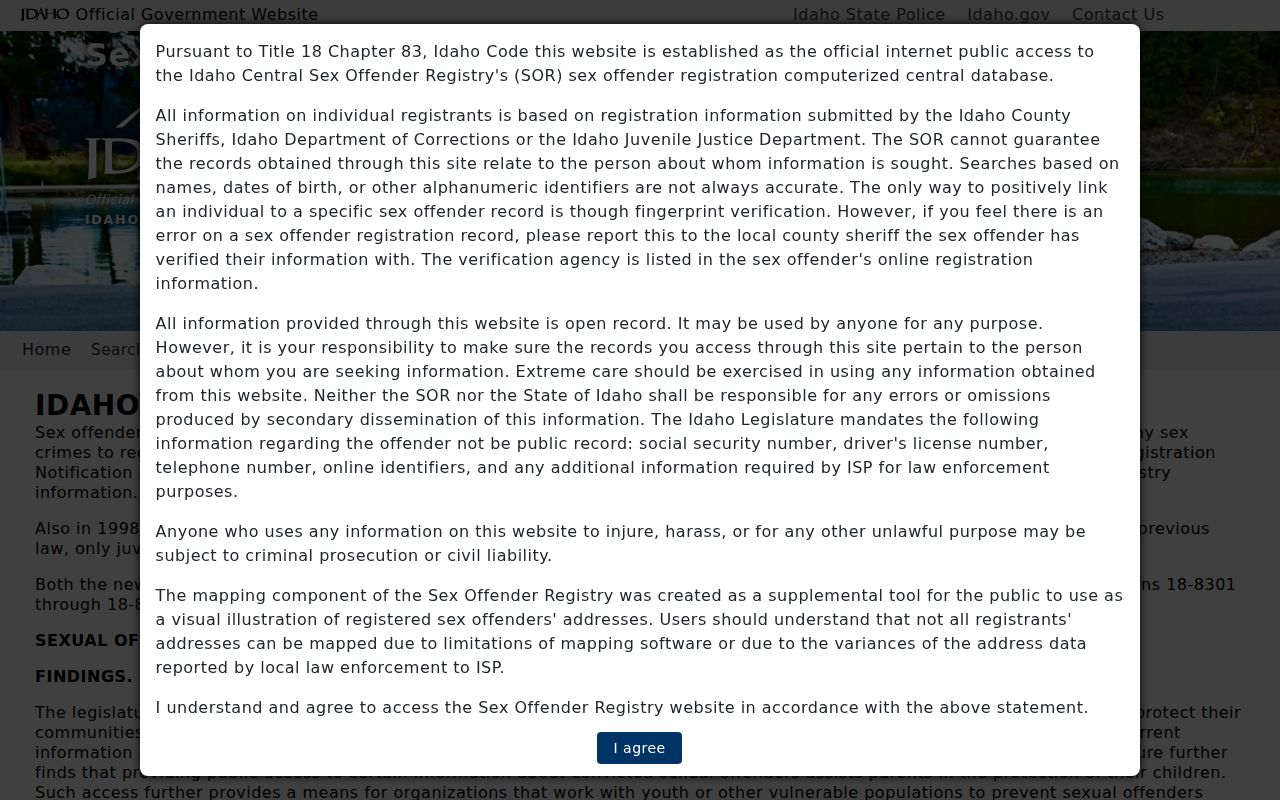
That gate makes lawful use and careful identity review part of the search itself.
Five Idaho Registry Search Routes
Idaho offers name, city, county, ZIP code, and map searches. The separate modes are useful because each answers a different question. A surname is best when a person is known. City, county, and ZIP lists scan a wider area. The map plots a radius near a supplied address, but it does not replace the lists. Quick lists also identify Violent Sexual Predators, non-compliant registrants, and records with pending status.
The registry’s search-method index lays out the public options.
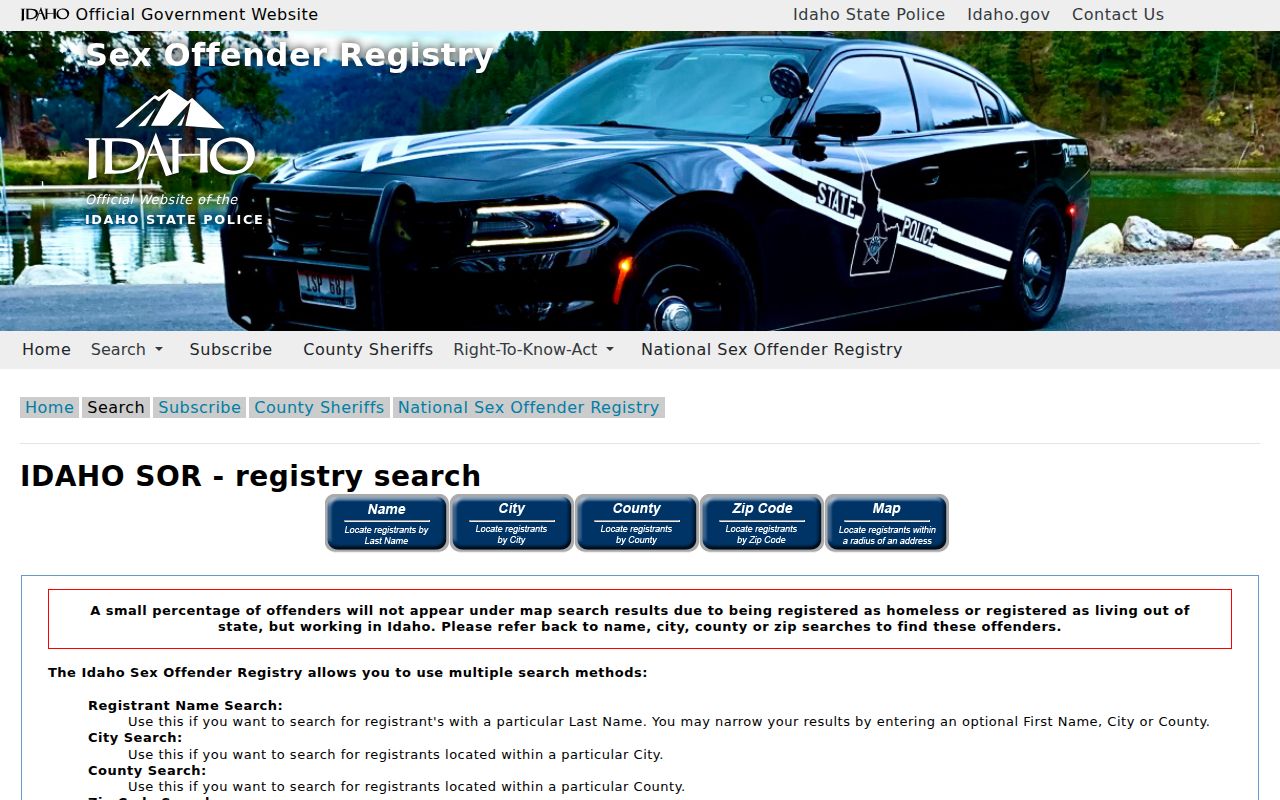
Using both a person search and a place search reduces the blind spots of either method alone.
Idaho SOR Search Steps
Start with the method that fits the question, then repeat the search through a second channel. The portal has separate adult and juvenile controls. Candidate lists are not identity findings. Compare the official details before drawing a conclusion, and remember that the registry describes a registration duty rather than every event in a person’s Idaho criminal history.
- Open the Idaho SOR and accept its lawful-use agreement.
- Search by last name, or select a city, county, or ZIP code for a geographic scan.
- Open a candidate profile and compare aliases, birth date, photograph, offense, and verification agency.
- Run the map or subscribe to address alerts, then use list search to check people the map can miss.
| Field Label | Type | Required | Notes |
|---|---|---|---|
| Last Name | Text | Yes for name search | Accepts up to 30 characters. |
| First Name | Text | No | Narrows candidates with the same surname. |
| City, County, or ZIP | Dropdown | Yes in its search | Each uses a represented Idaho value. |
| Adult or Juvenile | Radio | Yes | Adult is the default. |
| Street Address and Radius | Text and radio | Yes for map | Radius choices are 1, 3, or 5 miles. |
| Address and Email | Subscription form | Yes for alerts | Email is entered twice; radius is 1, 3, or 5 miles. |
The official name-search form shows the surname, first-name, place, and adult or juvenile controls.
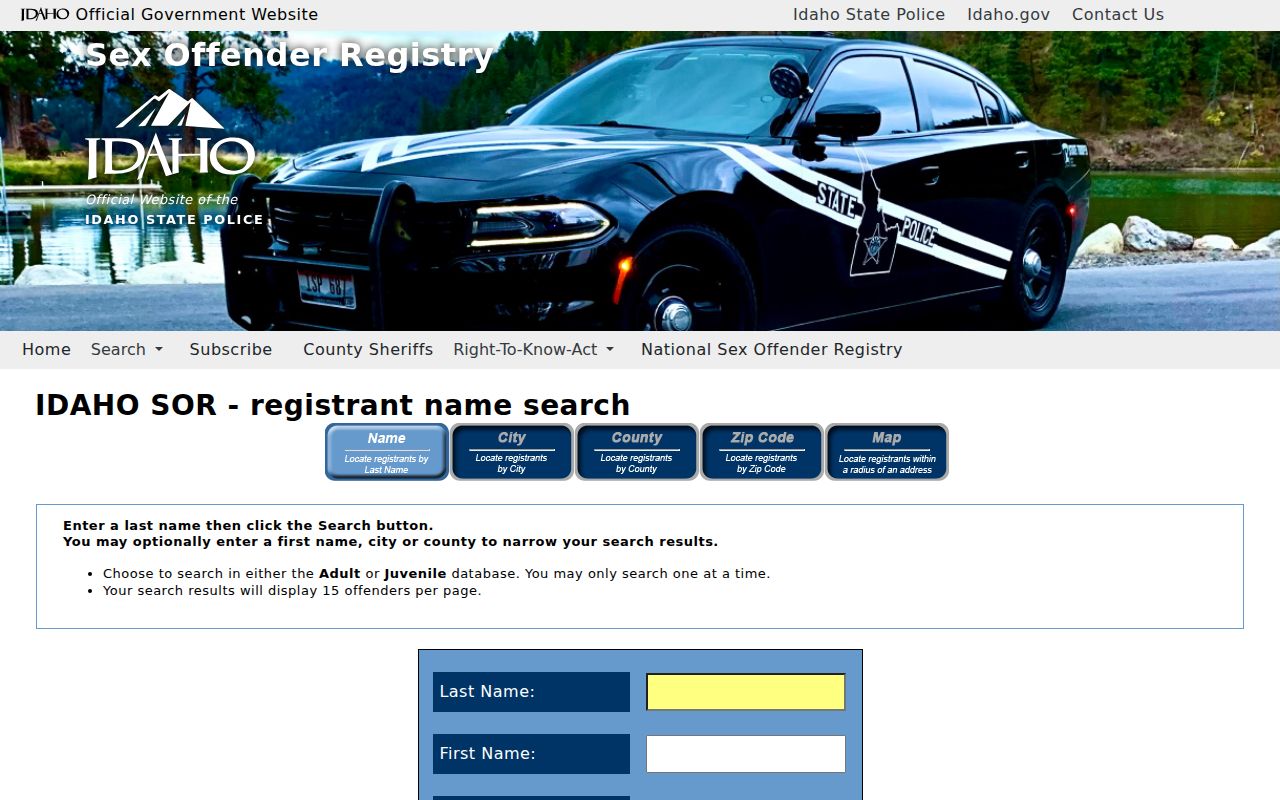
Those filters narrow candidates, but the profile still needs a careful identity check.
Why Idaho SOR Maps Miss Records
The Idaho SOR map first tries the street address, then the city and state. ISP warns that a pin may show only general proximity. A new street can fail if mapping files have not caught up. A person without a fixed home can also be absent, as can an out-of-state resident who works or studies in Idaho. A blank map is therefore not a clean result.
Use the map for nearby context. Then run county, city, or ZIP lists and a name lookup. Never treat a pin as a property-line measurement or proof that a residency rule was broken. The inspected Idaho law does not support one simple statewide distance rule for every person and every place.
The Idaho SOR map form documents its address and distance choices.
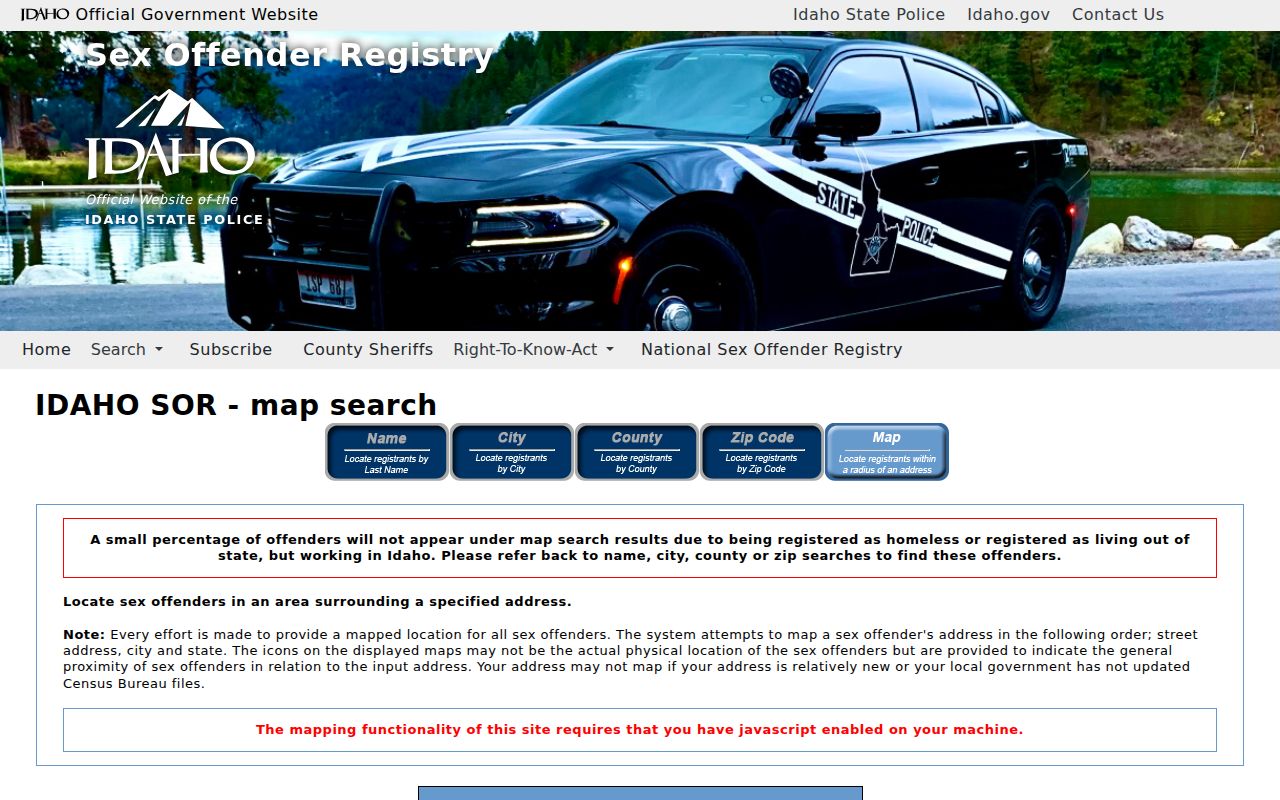
The image reinforces why list searches should follow every radius search.
Note: An Idaho registry map pin shows general proximity, not a precise home boundary or a legal finding.
What an Idaho Registry Profile Lists
A public profile combines identity, residence, conviction, and compliance fields authorized by Idaho law. It may show a current photograph, names and aliases, date of birth, physical traits, home or habitual-living description, a student address, qualifying offenses, place of conviction, temporary lodging, and the sheriff that last verified the record. Status labels can include Violent Sexual Predator, Non-Compliant, or Pending.
| Name & Aliases | Registered name plus prior or alternate names used for matching. |
|---|---|
| Photograph & Description | Current image and public physical descriptors for identity review. |
| Residence | Address or a description of habitual living location when no standard address exists. |
| Offense Details | Registered offenses, other qualifying sex convictions, and place of conviction. |
| Idaho Status | Violent Sexual Predator, compliance, or pending indicators when applicable. |
| Verification Agency | The county sheriff to contact about a possible error or noncompliance. |
Victim identities, Social Security numbers, internet identifiers, phone and driver-license numbers, passports, and associated household or work contacts stay off the public profile. Nonconviction arrest references are also withheld. These limits are why an Idaho registry profile cannot replace a BCI rap sheet or a court judgment.
Idaho Sex Offender Address Alerts
The free Subscribe form tracks movement into or out of a chosen radius. It asks for an Idaho street address, city, ZIP code, an email entered twice, and a radius of 1, 3, or 5 miles. The message is a movement alert, not a guarantee that every short stay or unmappable person will trigger notice. Save the confirmation and rerun direct searches from time to time.
The official Idaho address subscription displays each enrollment field.
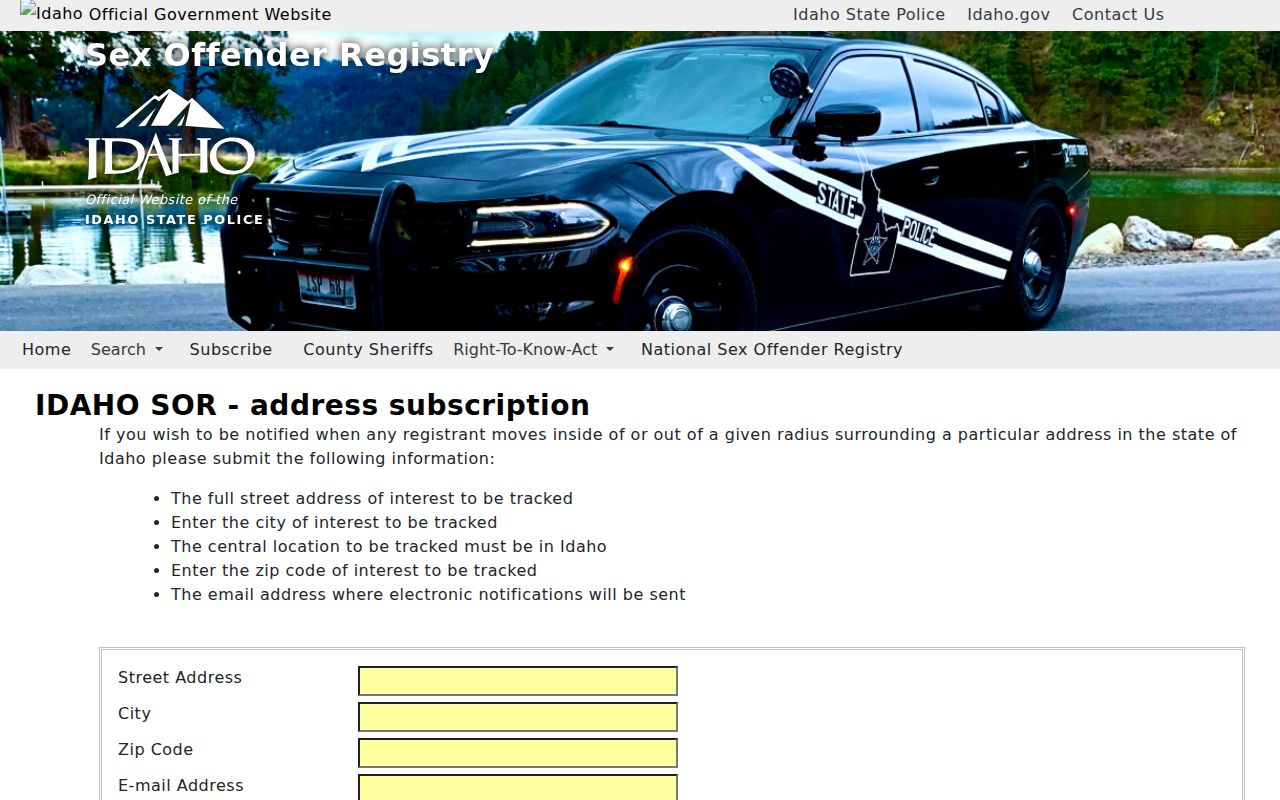
This alert adds ongoing notice to the point-in-time Idaho offender lookup.
Registry Levels and Requirements in Idaho
Idaho does not publish consumer-facing Tier I, Tier II, and Tier III labels. Its visible distinction is between an ordinary adult registrant and a person designated a Violent Sexual Predator, with separate adult and juvenile laws. Registration is generally for life. Some eligible people can petition after ten years from release or the end of supervision, whichever is later, but relief requires a court order. It is not an automatic ten-year tier.
| Idaho Category | Duration | Verification Frequency |
|---|---|---|
| Other adult registrant | Lifetime unless a court grants eligible relief | Annual sheriff appearance; mailed address check every four months |
| Violent Sexual Predator | Lifetime; ordinary ten-year petition unavailable | Sheriff registration every three months; mailed check every 30 days |
| No physical residence | Lifetime rules still apply | In-person sheriff report every 14 days |
| Nonresident worker or student | While Idaho duty applies | Register in the work or school county and keep data current |
Ordinary annual registration costs $80. A Violent Sexual Predator pays $50 at the first quarterly registration of the year and $10 at each later quarterly visit. A sheriff can waive a fee for indigency. These statutory payments support the registration system and electronic notice.
Idaho Sheriffs Verify SOR Records
County sheriffs perform work the central search cannot. They take the registration, photograph, fingerprints, and palm prints. They collect fees, conduct required residence visits, and send the signed record to BCI within three working days. A move to a new Idaho county changes the responsible sheriff. A suspected error should go to the verification agency named on the public profile.
Use the Idaho county directory to find the local records route. A registrant’s required appearance is an in-person legal duty, not an ordinary public-record request. For a public user, the sheriff is the right place to report a possible mismatch or noncompliance. For the exact conviction, use iCourt and the filing clerk.
Idaho and National Offender Searches
An Idaho lookup stops at the state’s data. When an address or person crosses a border, the U.S. Department of Justice National Sex Offender Public Website searches participating jurisdictions and links back to their responsible records. It is a federated search, not a replacement for Idaho’s current sheriff-verified detail.
Open each state result at its source. Registration terms, public fields, and update cycles differ across borders. If a person recently moved, check both the former jurisdiction and Idaho, then rely on the verification agency named in each official record. A national no-match should not override a known local court judgment or sheriff notice.
The national public search shows the separate cross-state route.
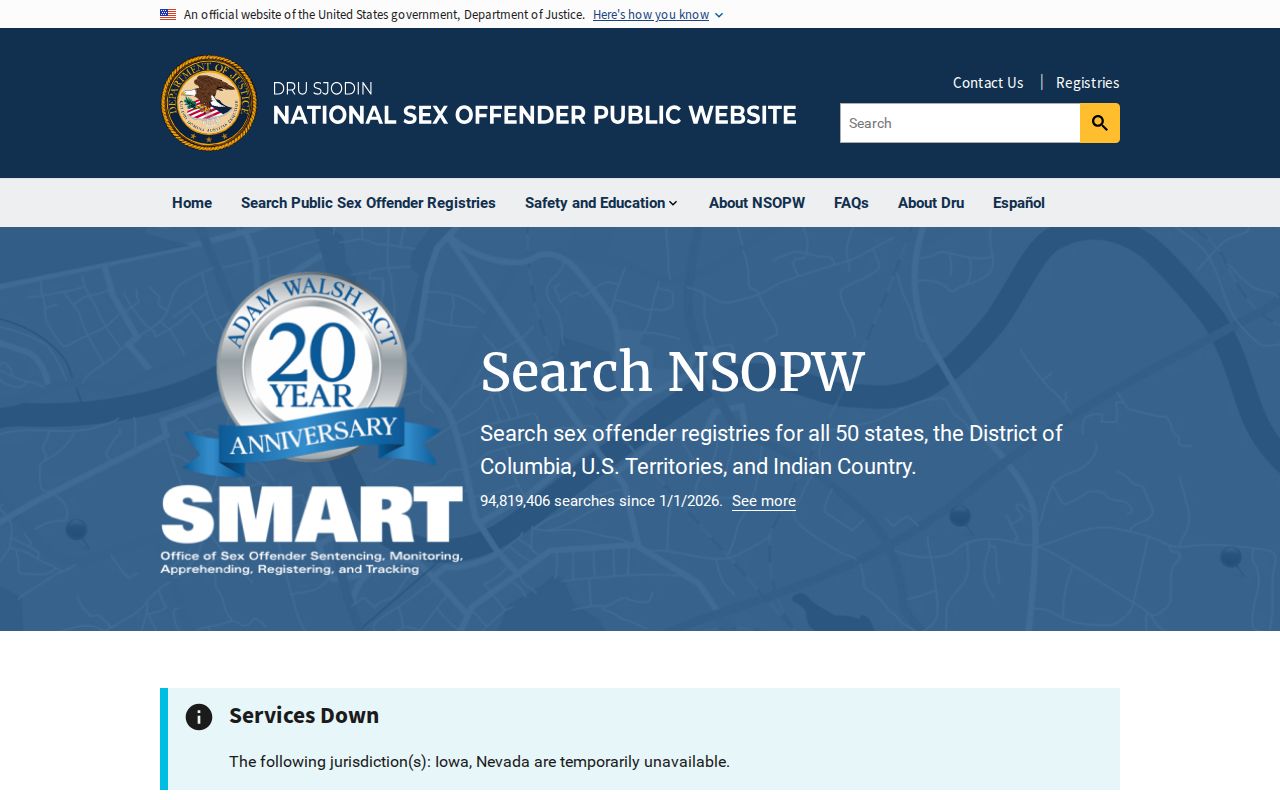
Open the Idaho source record after a national candidate appears, then verify the listed details.
Using Idaho SOR Lawfully
The Idaho SOR exists for protective awareness. It does not authorize contact, threats, surveillance, punishment, or publication of extra personal data. Idaho Code §18-8326 makes using registry information to commit a crime, cause physical harm, or damage property a misdemeanor. Idaho Code §74-120 also bars a commercial-purpose inquiry or the creation of telephone or mailing lists.
Call 911 for an immediate threat. Report suspected noncompliance to the verification sheriff. A pending or non-compliant label is a notice signal, not permission to investigate a person. If an offense label is unclear, get the judgment from the filing court. Use official facts and avoid spreading a same-name match.
Misuse is a crime. Idaho registry data may not be used to threaten, harass, harm, damage property, or commit another offense. Use it for awareness and report concerns to officials.